

How Syracuse patients can protect their new smile for years to come.
You wear the retainer every night for the first month. Then there is a late practice at Syracuse High, a sleepover, a week out on the water, and the case ends up buried in a gym bag.
Three months later, the retainer will not quite go on.
Here is the part patients are rarely told plainly: the retainer is not the cleanup step at the end of treatment. It is the part of treatment that never ends, and it asks far less of you than anything that came before it.
Why Do Teeth Shift After Braces Come Off?
Teeth shift because the tissue around them has memory, and because the mouth never stops changing.
Every tooth sits in bone, suspended by a network of elastic fibers. Moving a tooth stretches those fibers, and stretched fibers pull back toward where they started. The bone rebuilds around the new position over several months. The fibers in the gum tissue take longer to settle.
That is the first reason, and it is the one most people have heard. The second reason has nothing to do with braces at all.
Teeth drift with age on their own. It happens in people who never wore braces, which is why the AAO describes retainer wear as a long-term commitment rather than a short one. Your teeth are not misbehaving. They are doing what teeth do.
So retention isn't punishment for a treatment that didn't hold. It is maintenance on a result that is worth maintaining.
How Long Do You Have to Wear a Retainer?
Plan on wearing a retainer in some form for life. Most of our patients wear theirs nearly full time for the first several months after braces or aligners come off, then move to nights only.
The AAO states it plainly: a retainer is necessary for a lifetime, though how often you wear it may decrease over time. Their patient guidance goes further, noting that many people wear retainers nightly for life to hold their results.
Nightly wear sounds like a lot until you compare it with the alternative. Eight hours asleep costs you nothing. Redoing a relapsed case costs time and money you already spent once.
The Three Phases of Retention
Retention is not one job. It is three, and the retainer is doing something slightly different in each.
Settle. In the first months, the bone and gum tissue rebuild around the new tooth positions, so the retainer is worn most of the day.
Hold. Once the tissue has stabilized, nightly wear is usually enough to keep everything where we placed it.
Maintain. Years later, the retainer is doing a different job entirely: holding the line against the slow drift that happens to everyone with age.
What Happens If You Stop Wearing Your Retainer?
Teeth begin moving within weeks, and the lower front teeth are usually the first to show it.
Small rotations and mild crowding tend to come back first because the surrounding tissue resists those movements most. Bite changes take longer but can follow.
How much a specific person loses depends on how far the teeth were moved, how long ago treatment ended, and how long the retainer has been sitting in a drawer. Some patients go a year and lose almost nothing. Others lose visible ground in a summer.
We cannot tell you online which one you are. What we can tell you is that the fix is nearly always simpler the sooner you call, and that a retainer check takes a few minutes.
Which Retainer Is Best: Clear, Hawley, or Fixed?
The best retainer is the one you will actually wear.
Research has not identified one retainer type that is best for everyone. Each option has advantages: removable retainers may be easier to clean, while bonded retainers stay in place and don't depend on you remembering to wear them. Some removable retainers may also work just as well with part-time wear as with full-time wear.
Ultimately, the best retainer is the one that fits your teeth, your routine, and your ability to use it consistently for years to come.
| Clear removable retainer | Hawley retainer | Fixed bonded retainer | |
|---|---|---|---|
| How it works | A thin, clear plastic tray formed over a model of your finished teeth. | An acrylic plate against the roof of the mouth or behind the lower teeth, with a wire across the front teeth. | A slender wire bonded to the tongue side of the front teeth. |
| Strengths | Nearly invisible, comfortable, easy to sleep in. | Very durable, adjustable by your orthodontist, available in colors. | Nothing to remember. It works every hour of every day. |
| Trade-offs | Warps with heat, can crack, wears out, and needs replacing. | More visible, and speech takes a few days to adjust. | Flossing takes more care, and the bond can loosen quietly. |
| Best for | Patients who want retention nobody notices. | Patients who are hard on appliances or want a retainer that lasts years. | Patients whose lower front teeth were significantly rotated or crowded. |
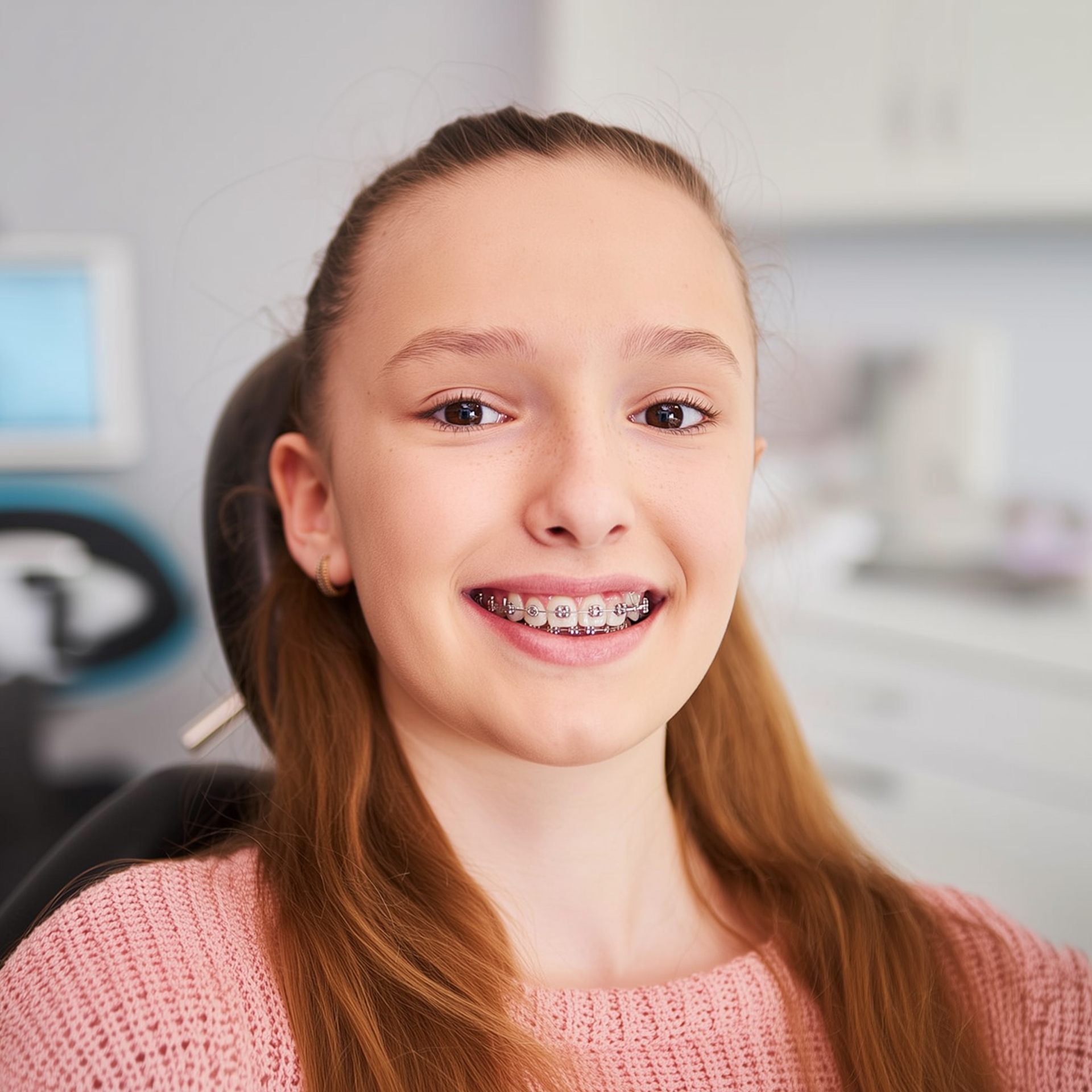
We fit retainers after metal braces, clear braces, and clear aligners. The finishing appliance doesn't change the need for retention, and it usually doesn't change which retainer we recommend.
How Do You Keep a Retainer Clean?
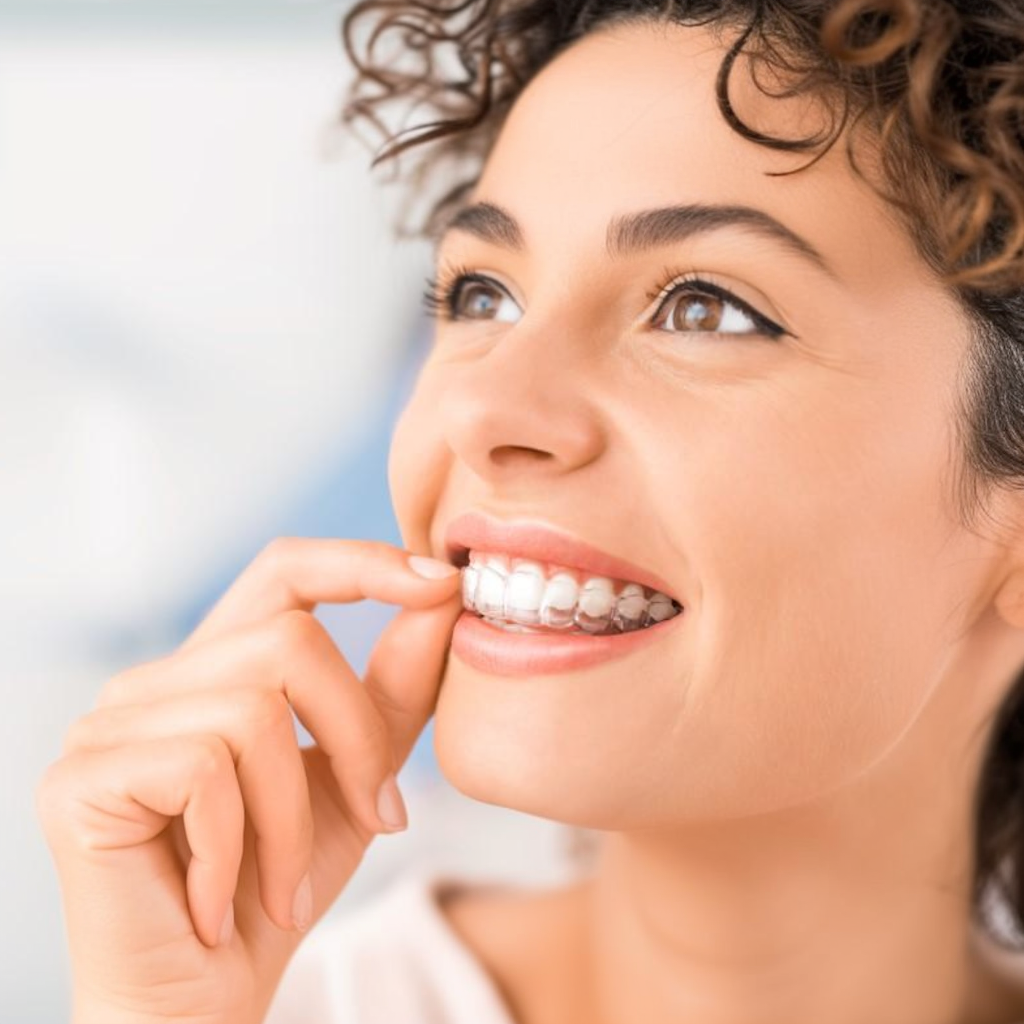
Clean your clear, removable retainer every day with a soft toothbrush and cool or lukewarm water, then store it dry in its case.
Heat is the main enemy. Boiling water, a dishwasher, a stovetop, and a car dashboard in the heat all warp the plastic. Warped plastic no longer fits your teeth, which means it no longer does the job you are wearing it for.
The other reason to clean it daily is simpler. A retainer builds up the same film that builds up on teeth. That film smells, it clouds clear plastic, and it sits against your gums for eight hours a night.
The AAO's own guidance is to brush a removable retainer with toothpaste when it comes out, and to use an effervescent cleanser if your orthodontist recommends one. If your retainer is clear plastic, ask us before reaching for a whitening or tartar-control paste, since heavily abrasive formulas can scratch the surface and cloud it early.
When Does a Retainer Need to Be Replaced?
Replace a retainer when it no longer seats precisely, when the plastic is cracked, cloudy, or thinning, or when a wire has bent out of shape.
Clear retainers wear out faster than Hawley retainers. Thin plastic takes a nightly beating from clenching and grinding, and how fast that happens varies enormously from patient to patient.
There is no calendar for it, which is exactly why replacement is the step most retention plans quietly fail on. A patient waits, because a new retainer feels like an unplanned expense, and by the time they call, the old retainer no longer matches their teeth.
That is why we built replacement into a plan instead of leaving it to chance. Our Retain4Five program covers up to four retainers a year for five years for one up-front cost of $599, and Retain Phase 1 does the same for younger patients still growing between phases.
We also partner with Retainer Club, which ships custom replacement retainers to your door rather than requiring an appointment for every set.
Retainers and Real Life in Syracuse
Retainers get lost in predictable places. Lunch trays at Syracuse Junior High. Gym bags after practice at Syracuse High. Duffel bags on the way out past the Antelope Island causeway.
Two habits prevent almost all of it. The case travels with the retainer, never a napkin or a pocket. And the retainer goes back in the case the second it comes out, not after the meal.
If your family is heading out of town for a week, take it along. A week without a retainer is usually recoverable. A summer without one often is not.
And for Davis School District families juggling early practices and late homework, our Tuesday and Thursday hours start at 6:30 in the morning. A retainer check does not have to cost anyone a class period. We are here to make treatment accessible and convenient for you and your family.
Why Families Choose Coleman Orthodontics for Life After Braces
- Board-certified expertise. Dr. Brett Coleman is certified by the American Board of Orthodontics, a voluntary process built entirely around defending finished results. Retention is where finished results are either kept or lost.
- A replacement plan in writing. Retain4Five covers up to four retainers a year for five years for one up-front cost. Most practices tell patients to call when a retainer breaks. We would rather remove the reason to hesitate.
- Retainers that come to you. Through our Retainer Club partnership, replacement retainers are shipped to your home instead of requiring a visit for every set.
- Research-minded care. Dr. Tanner Godfrey holds a PhD in biochemistry alongside his dental degree and has published peer-reviewed work on bone and tooth development. That is precisely the biology retention depends on.
- Retention planned from the start. We talk about what happens after treatment during treatment, not on the day the braces come off.
- Local roots. Dr. Coleman grew up in North Ogden, trained at Weber State, and lives here in Syracuse with his family. Patients we finish are the ones we run into at the grocery store years later.
- Hours that fit a school year. Tuesday and Thursday appointments begin at 6:30 am, and Monday and Wednesday run until 4:30 pm.
Frequently Asked Questions About Retainers
How long do I have to wear a retainer after braces?
Plan on wearing a retainer for life. Most patients wear one nearly full time for the first several months after treatment, then move to nights only.
What happens if I stop wearing my retainer?
Teeth begin drifting back within weeks, and the lower front teeth usually move first. How much you lose depends on how far your teeth were moved and how long the retainer has been out. We cannot predict a specific mouth online, but the fix is almost always simpler the sooner you call.
How do I clean a clear retainer without ruining it?
Rinse it as soon as it comes out, brush it gently with a soft toothbrush and cool or lukewarm water every morning, and store it dry in its case. Skip hot water, boiling, dishwashers, bleach, and alcohol.
Why does my retainer suddenly feel tight?
Tightness usually means your teeth have started to move and the retainer is pulling them back. That is the retainer doing its job. Keep wearing it and call us. If it will not seat at all, stop forcing it, because pressing hard on a poorly fitting retainer can crack it or hurt a tooth.
How often do retainers need to be replaced?
There is no fixed schedule. Replace a retainer when it no longer seats precisely, when the plastic is cracked, cloudy, or thin, or when a wire has bent. Clear retainers wear out faster than Hawley retainers because nightly clenching thins the plastic. Our Retain4Five program covers replacements in advance.
Sources
- American Association of Orthodontists. Are Retainers Necessary After Orthodontic Treatment? https://aaoinfo.org/whats-trending/will-i-need-to-wear-retainers/
- American Association of Orthodontists. Retainers. https://aaoinfo.org/treatments/retainers/
- American Association of Orthodontists. Retainer Care 101: Ensuring Long-Term Orthodontic Success. https://aaoinfo.org/whats-trending/taking-care-of-retainers/
- Martin C, Littlewood SJ, Millett DT, Doubleday B, Bearn D, Worthington HV, Limones A. (2023). Retention procedures for stabilising tooth position after treatment with orthodontic braces. Cochrane Database of Systematic Reviews, Issue 5, Article No. CD002283. DOI: 10.1002/14651858.CD002283.pub5. https://www.cochranelibrary.com/cdsr/doi/10.1002/14651858.CD002283.pub5/full